
Agriculture is changing rapidly as farmers face growing challenges related to climate variability, labor availability, resource management, and food production.
Modern agricultural equipment is helping address these challenges by making farming operations more efficient, precise, and adaptable.
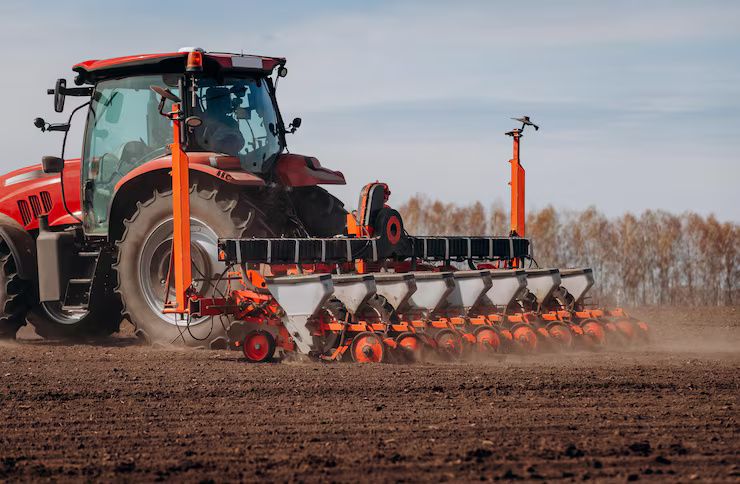
From tractors and planting machinery to automated harvesting systems and precision agriculture technologies, today's farm equipment combines mechanical engineering with digital tools. These developments allow farmers to manage larger areas, reduce unnecessary resource use, improve productivity, and make better decisions based on real-time field information.
Understanding agricultural machinery is therefore important for anyone interested in modern farming, agricultural technology, or sustainable food production. This guide explores the major types of agricultural equipment, how automation is transforming farming, and the role of technology in building more sustainable agricultural systems.
What Is Agricultural Equipment?
Agricultural equipment refers to the machinery, tools, and technology used to perform farming activities. These systems support nearly every stage of agricultural production, from preparing soil and planting seeds to irrigation, crop protection, harvesting, and post-harvest handling.
Common examples include:
- Tractors
- Plows and cultivators
- Seeders and planters
- Irrigation equipment
- Sprayers
- Fertilizer spreaders
- Harvesting machinery
- Balers
- Grain handling systems
- Livestock equipment
The right equipment depends on factors such as farm size, crop type, soil conditions, climate, and the level of automation required.
Why Modern Farm Equipment Matters
Traditional farming methods often rely heavily on manual labor and repeated field operations. While these approaches remain valuable in many agricultural settings, modern machinery can help improve consistency and efficiency.
Agricultural equipment can support farmers by:
- Reducing repetitive manual work
- Improving planting accuracy
- Supporting timely field operations
- Managing large areas more efficiently
- Reducing unnecessary fuel and resource use
- Improving harvesting consistency
- Collecting useful field data
The objective is not simply to increase machinery use but to match equipment capabilities with actual farm requirements.
Major Types of Agricultural Machinery
Agricultural machinery covers a broad range of specialized equipment. Each category performs a specific role within the farming cycle.
Tractors
Tractors are among the most versatile types of farm equipment. They provide power for pulling and operating implements used in soil preparation, planting, spraying, and other field activities.
Modern tractors increasingly include GPS guidance, digital displays, automated steering, telematics, and sensor-based monitoring.
Soil Preparation Equipment
Plows, harrows, cultivators, and related implements prepare soil for planting.
Modern approaches increasingly focus on minimizing unnecessary soil disturbance. Conservation tillage and reduced-tillage practices can help protect soil structure and reduce erosion when appropriate for local conditions.
Planting and Seeding Equipment
Seeders and planters are designed to place seeds at controlled depths and spacing.
Precision planting technology can improve uniformity by using sensors and digital controls to monitor seed placement and adjust equipment performance.
Crop Protection Equipment
Sprayers and application systems distribute fertilizers, pesticides, or other agricultural inputs.
Advanced systems can use GPS, sensors, and variable-rate technology to apply materials more precisely, helping reduce unnecessary application.
Agricultural Harvesting Equipment
Agricultural harvesting equipment is designed to collect mature crops efficiently while reducing losses and protecting product quality.
Examples include:
- Combine harvesters
- Forage harvesters
- Cotton pickers
- Potato harvesters
- Grape harvesters
- Specialized fruit harvesting systems
Modern harvesting equipment often includes sensors that monitor crop conditions and machine performance during operation.
The Role of Agricultural Equipment Manufacturers
Agricultural equipment manufacturers play an important role in developing machinery that responds to changing farming requirements.
Modern development increasingly focuses on:
- Fuel efficiency
- Automation
- Precision agriculture
- Equipment connectivity
- Operator comfort
- Data collection
- Reduced environmental impact
Manufacturers are also exploring electric and alternative power systems, autonomous machinery, and intelligent equipment capable of communicating with farm management platforms.
The agricultural equipment industry is gradually moving from standalone machines toward connected systems that share information across the entire farming operation.
Automation in Modern Agriculture
Automation is one of the most significant developments in agricultural technology.
Automated equipment can perform specific tasks with limited direct operator intervention. GPS guidance, machine vision, sensors, and artificial intelligence are increasingly being incorporated into agricultural machinery.
Examples of automation include:
- Automated tractor steering
- Robotic weed detection
- Autonomous field operations
- Automated irrigation control
- Robotic harvesting
- Sensor-based crop monitoring
Automation can help address labor shortages while improving consistency and allowing farmers to focus more attention on planning and management.
Precision Agriculture and Data-Driven Farming
Precision agriculture uses technology and field data to manage agricultural operations more accurately.
Sensors, GPS systems, drones, satellites, and connected machinery can provide information about:
- Soil conditions
- Crop health
- Moisture levels
- Weather patterns
- Equipment performance
- Field variability
Farmers can use this information to make more informed decisions about planting, irrigation, fertilization, and crop protection.
The key advantage of precision agriculture is that it recognizes that fields are not always uniform. Different areas may require different levels of water, nutrients, or attention.
Sustainable Agriculture and Equipment
Sustainability has become an important consideration in modern farming.
Agricultural equipment can support sustainable practices by improving the efficiency of resource use.
Examples include:
Reduced Soil Disturbance
Conservation tillage equipment can help maintain soil structure and reduce erosion.
Precision Application
Variable-rate systems can apply inputs according to field conditions rather than treating every area identically.
Efficient Irrigation
Automated irrigation systems can use soil moisture sensors and weather information to help manage water application.
Fuel Efficiency
Modern machinery is increasingly designed to perform agricultural tasks while using energy more efficiently.
Reduced Crop Loss
Advanced harvesting systems can improve crop handling and reduce unnecessary losses during collection.
Sustainable farming does not depend on machinery alone. Equipment works alongside soil management, crop rotation, water conservation, biodiversity protection, and responsible agricultural planning.
Comparing Agricultural Equipment Categories
| Equipment Category | Main Function | Technology Trends |
|---|---|---|
| Tractors | Power and field operations | GPS, automation, telematics |
| Planters | Seed placement | Precision planting |
| Sprayers | Crop protection | Variable-rate application |
| Irrigation Systems | Water management | Sensors and automation |
| Harvesters | Crop collection | Smart monitoring |
| Drones | Field observation | Imaging and data analysis |
Each category contributes to a different stage of agricultural production, and integrated systems can connect these functions for better overall farm management.
Challenges in Adopting Modern Farm Equipment
Although advanced agricultural equipment offers many advantages, adoption can present practical challenges.
Technical Complexity
Modern machinery may require specialized knowledge to operate, maintain, and troubleshoot.
Infrastructure Requirements
Connected equipment often depends on reliable digital connectivity, data systems, and technical support.
Maintenance
Sophisticated machinery requires regular inspections and preventive maintenance to maintain reliable performance.
Operator Training
Farm workers may need additional training to use GPS systems, digital interfaces, automated controls, and data platforms effectively.
Suitability
Not every technology is appropriate for every farm. Equipment selection should consider farm size, crop type, terrain, climate, and operational requirements.
Future Trends in Agricultural Equipment
The future of agricultural machinery is increasingly connected to automation, artificial intelligence, robotics, and sustainable energy.
Important developments include:
- Autonomous tractors
- Electric agricultural machinery
- Robotic harvesting
- AI-assisted crop monitoring
- Machine vision
- Connected farm equipment
- Predictive maintenance
- Advanced precision agriculture
- Smart irrigation
- Digital farm management platforms
Autonomous machinery may eventually perform more routine field tasks with minimal human intervention. At the same time, connected equipment will allow farmers to monitor machinery and field conditions remotely.
The most important trend is likely to be greater integration. Instead of individual machines operating independently, future agricultural systems will increasingly connect machinery, sensors, software, weather information, and farm management data.
Frequently Asked Questions
What is agricultural equipment?
Agricultural equipment includes machinery, tools, and technologies used for farming activities such as soil preparation, planting, irrigation, crop protection, harvesting, and post-harvest handling.
What is the difference between agricultural machinery and farm equipment?
The terms are often used interchangeably. Agricultural machinery generally refers to powered machines such as tractors and harvesters, while farm equipment can also include non-powered implements and specialized tools.
What is agricultural harvesting equipment?
Agricultural harvesting equipment includes specialized machinery used to collect mature crops efficiently. Examples include combine harvesters, forage harvesters, cotton pickers, and specialized fruit harvesting systems.
How does automation improve farming?
Automation can reduce repetitive manual work, improve operational consistency, support precision agriculture, and help farmers manage field activities more efficiently.
How does modern equipment support sustainable agriculture?
Modern machinery can support sustainability through precision input application, efficient irrigation, reduced soil disturbance, improved fuel efficiency, and reduced crop losses.
Conclusion
Agricultural equipment is becoming an increasingly important part of modern farming as producers seek greater efficiency, precision, and sustainability. From versatile tractors and planting machinery to advanced agricultural harvesting equipment, each technology contributes to a specific stage of the agricultural production cycle.
The next generation of farm equipment will likely combine automation, artificial intelligence, robotics, connected sensors, and data-driven decision-making. However, technology alone does not determine successful farming. The most effective approach is to select agricultural machinery based on real operational needs while combining modern equipment with sound agronomic practices and responsible resource management.
As agricultural equipment manufacturers continue to develop smarter and more connected solutions, farming is moving toward systems that can use resources more precisely, respond to changing field conditions, and support sustainable food production for the future.