Industrial powder coating has become an important finishing method for metal components used across manufacturing, construction, transportation, machinery, appliances, and infrastructure.
Unlike conventional liquid coatings, powder coating applies a dry powder to a prepared surface before curing it under controlled heat. The resulting finish can provide a combination of durability, appearance, and resistance to environmental conditions.
However, selecting the right industrial powder coating is not simply a matter of choosing a color or finish. Different metals, operating environments, preparation methods, and performance requirements can significantly influence coating performance. Steel used in outdoor equipment may require different protection from aluminum used in architectural applications or galvanized metal exposed to demanding conditions.
Understanding the relationship between the substrate, coating chemistry, surface preparation, and application process helps manufacturers and engineers make more informed decisions. This guide explains the fundamentals of industrial powder coating and provides a practical framework for selecting coatings for different metal surfaces.
What Is Industrial Powder Coating?
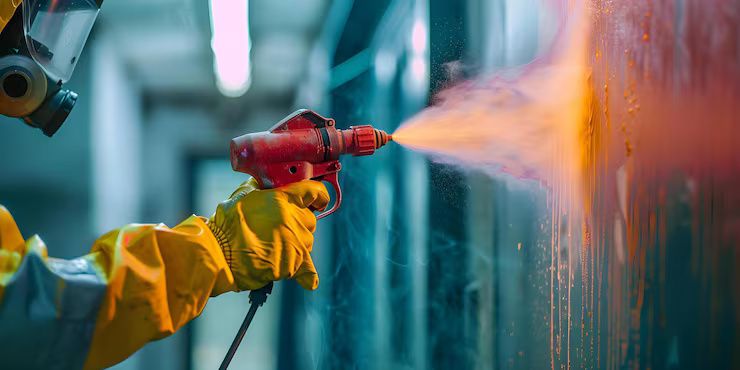
Industrial powder coating is a dry finishing process in which finely ground resin particles, pigments, additives, and other materials are electrostatically applied to a metal surface. The coated component is then heated in a curing oven, allowing the powder particles to melt, flow, and form a continuous protective film.
The coating system generally consists of several key stages:
- Surface preparation
- Powder application
- Electrostatic attraction
- Curing
- Cooling and inspection
The final performance depends on how effectively these stages work together. A high-quality powder formulation cannot compensate for inadequate surface preparation or incorrect curing conditions.
Why Metal Selection Matters
Different metals have different physical and chemical characteristics. Their surface condition, thermal behavior, corrosion tendencies, and preparation requirements can influence coating adhesion and long-term performance.
Common industrial substrates include:
- Carbon steel
- Stainless steel
- Aluminum
- Galvanized steel
- Zinc-coated components
- Cast iron
- Other engineered metal alloys
The same powder coating may not perform equally on every substrate. Selecting the right system requires consideration of both the metal itself and the environment in which the finished component will operate.
Powder Coating for Carbon Steel
Carbon steel is widely used in industrial machinery, automotive components, storage systems, furniture, structural products, and equipment.
Industrial powder coating on carbon steel can provide protection against:
- Corrosion
- Scratches
- Abrasion
- General environmental exposure
- Chemical contact, depending on formulation
Proper preparation is especially important because untreated carbon steel can develop corrosion quickly. Cleaning, degreasing, and suitable surface preparation help remove contaminants and create a stronger foundation for coating adhesion.
For outdoor applications, the coating system should be selected based on expected exposure to moisture, ultraviolet radiation, temperature changes, and atmospheric conditions.
Powder Coating for Aluminum
Aluminum is lightweight and naturally forms a protective oxide layer, making it common in transportation, architecture, electronics, and industrial equipment.
Powder coating aluminum requires careful surface preparation because its naturally occurring oxide layer can influence adhesion. Cleaning and pretreatment are therefore important steps.
Coating selection may depend on:
- Outdoor exposure
- Color stability
- UV resistance
- Flexibility requirements
- Desired appearance
- Mechanical durability
Architectural aluminum often requires coatings designed to maintain appearance and performance under long-term outdoor exposure.
Powder Coating for Galvanized Steel
Galvanized steel has a zinc coating that provides corrosion protection to the underlying steel. Applying powder coating over galvanized surfaces can create an additional protective and decorative layer.
However, galvanized substrates require specialized preparation.
Potential concerns include:
- Surface contamination
- Zinc surface condition
- Gas release during curing
- Adhesion challenges
- Surface irregularities
Proper pretreatment and controlled curing are essential when powder coating galvanized steel. Coating systems should be selected specifically for compatibility with zinc-coated surfaces.
Powder Coating for Stainless Steel
Stainless steel naturally provides strong resistance to corrosion because of its chromium-rich passive surface layer.
Although stainless steel may not always require additional coating, powder coating can be used when a particular color, appearance, or additional functional characteristic is desired.
Surface preparation is critical because the passive surface can make adhesion more challenging. Specialized cleaning and preparation methods may be necessary to achieve consistent results.
Coating selection should consider whether the finished component will be exposed to moisture, chemicals, high temperatures, or mechanical wear.
Understanding Powder Coating Chemistries
Industrial powder coatings are available in several resin families, each offering different performance characteristics.
Epoxy Powder Coatings
Epoxy coatings generally provide strong adhesion and chemical resistance. They are commonly used for interior industrial components and applications where UV exposure is limited.
Extended outdoor exposure can cause color or gloss changes, so epoxy systems are often selected according to environmental requirements.
Polyester Powder Coatings
Polyester systems are widely used for exterior applications because they generally provide good resistance to weathering and ultraviolet exposure.
They are commonly applied to architectural components, outdoor equipment, and general industrial products.
Epoxy-Polyester Hybrid Coatings
Hybrid systems combine characteristics of epoxy and polyester resins. They are frequently used for indoor applications where balanced mechanical and chemical performance is required.
Polyurethane Powder Coatings
Polyurethane systems can provide smooth finishes and strong resistance to weathering and abrasion. They may be selected for applications requiring specific appearance and durability characteristics.
Comparing Coating Types
| Coating Chemistry | Common Strength | Typical Application Consideration |
|---|---|---|
| Epoxy | Adhesion and chemical resistance | Interior environments |
| Polyester | Weather and UV resistance | Exterior applications |
| Epoxy-Polyester Hybrid | Balanced performance | General indoor use |
| Polyurethane | Smooth appearance and durability | Specialized exterior applications |
The best choice depends on the substrate, operating environment, exposure conditions, and performance requirements rather than coating chemistry alone.
The Importance of Surface Preparation
Surface preparation is one of the most important factors in industrial powder coating.
Before coating, metal surfaces may need to be cleaned to remove:
- Oil
- Grease
- Dirt
- Rust
- Oxides
- Manufacturing residues
- Previous coatings
Depending on the substrate, preparation may involve chemical pretreatment, abrasive cleaning, or other controlled methods.
A properly prepared surface helps improve coating adhesion and reduces the risk of premature failure.
How to Select the Right Industrial Powder Coating
When evaluating options from Powder Coating Manufacturers or Powder Coating Suppliers, several technical questions should be considered.
Identify the Metal Substrate
Determine whether the component is carbon steel, aluminum, stainless steel, galvanized steel, or another alloy.
Evaluate the Environment
Consider exposure to:
- Sunlight
- Rain
- Humidity
- Salt
- Chemicals
- Temperature fluctuations
- Industrial pollutants
Define Performance Requirements
Determine whether the coating must prioritize:
- Corrosion resistance
- UV stability
- Chemical resistance
- Abrasion resistance
- Impact resistance
- Flexibility
- Appearance retention
Consider the Application Process
The coating must be compatible with the available application equipment and curing conditions.
Oven temperature, part thickness, heating characteristics, and production requirements can influence coating selection.
Working With Industrial Powder Coating Suppliers
Industrial Powder Coating Suppliers can provide technical information about coating formulations, substrate compatibility, application requirements, and curing specifications.
When evaluating Industrial Powder Coating Manufacturers, it is useful to consider whether they provide:
- Technical documentation
- Application guidelines
- Substrate recommendations
- Quality control information
- Testing data
- Technical support
Clear technical communication helps ensure that the selected coating matches the actual operating conditions.
Common Powder Coating Mistakes to Avoid
Several problems can reduce coating performance.
Inadequate Surface Preparation
Contaminants left on the metal can interfere with adhesion and contribute to coating failure.
Incorrect Curing
Insufficient or excessive curing can affect the coating's mechanical and chemical properties.
Ignoring Environmental Exposure
A coating designed for indoor use may not provide adequate long-term performance outdoors.
Selecting Based Only on Appearance
Color and gloss are important, but technical performance should remain a primary consideration.
Overlooking Substrate Differences
A coating that works well on steel may require different preparation or formulation when applied to aluminum or galvanized metal.
Future Trends in Industrial Powder Coating
The industry continues to develop coatings that improve performance while supporting more efficient manufacturing processes.
Emerging trends include:
- Lower-temperature curing technologies
- Faster curing formulations
- Improved corrosion resistance
- Enhanced chemical resistance
- Sustainable powder formulations
- Greater use of automated application systems
- More precise coating thickness control
- Advanced quality monitoring
Automation and digital process monitoring are also helping manufacturers maintain more consistent coating quality across large production environments.
Frequently Asked Questions
What is industrial powder coating used for?
Industrial powder coating is used to protect and finish metal components in industries such as manufacturing, construction, transportation, machinery, appliances, and infrastructure.
Can powder coating be applied to different metals?
Yes. Powder coating can be applied to substrates such as steel, aluminum, stainless steel, and galvanized steel, although each metal may require specific preparation and coating considerations.
Which powder coating is suitable for outdoor applications?
Exterior-grade polyester and certain polyurethane systems are commonly considered for outdoor environments because of their resistance to weathering and UV exposure. The specific formulation should be selected based on the expected conditions.
Why is surface preparation important?
Surface preparation removes contaminants and creates conditions that support proper coating adhesion. Poor preparation can contribute to premature coating failure.
How should I choose between Powder Coating Manufacturers and suppliers?
Consider technical documentation, substrate compatibility information, quality standards, application guidance, and the manufacturer's ability to support the specific requirements of the intended application.
Conclusion
Selecting the right industrial powder coating requires a complete understanding of the metal substrate, environmental conditions, performance requirements, surface preparation, and curing process. Carbon steel, aluminum, stainless steel, and galvanized steel each present different considerations that can influence coating adhesion, durability, and long-term appearance.
By evaluating these factors carefully and consulting technical information from qualified Powder Coating Manufacturers, Powder Coating Suppliers, and Industrial Powder Coating Suppliers, manufacturers can select coating systems that are better aligned with their application requirements. The most effective approach is to treat powder coating as a complete process rather than simply a finishing material, with substrate preparation, application, curing, and quality control all contributing to the final performance of the finished metal surface.